
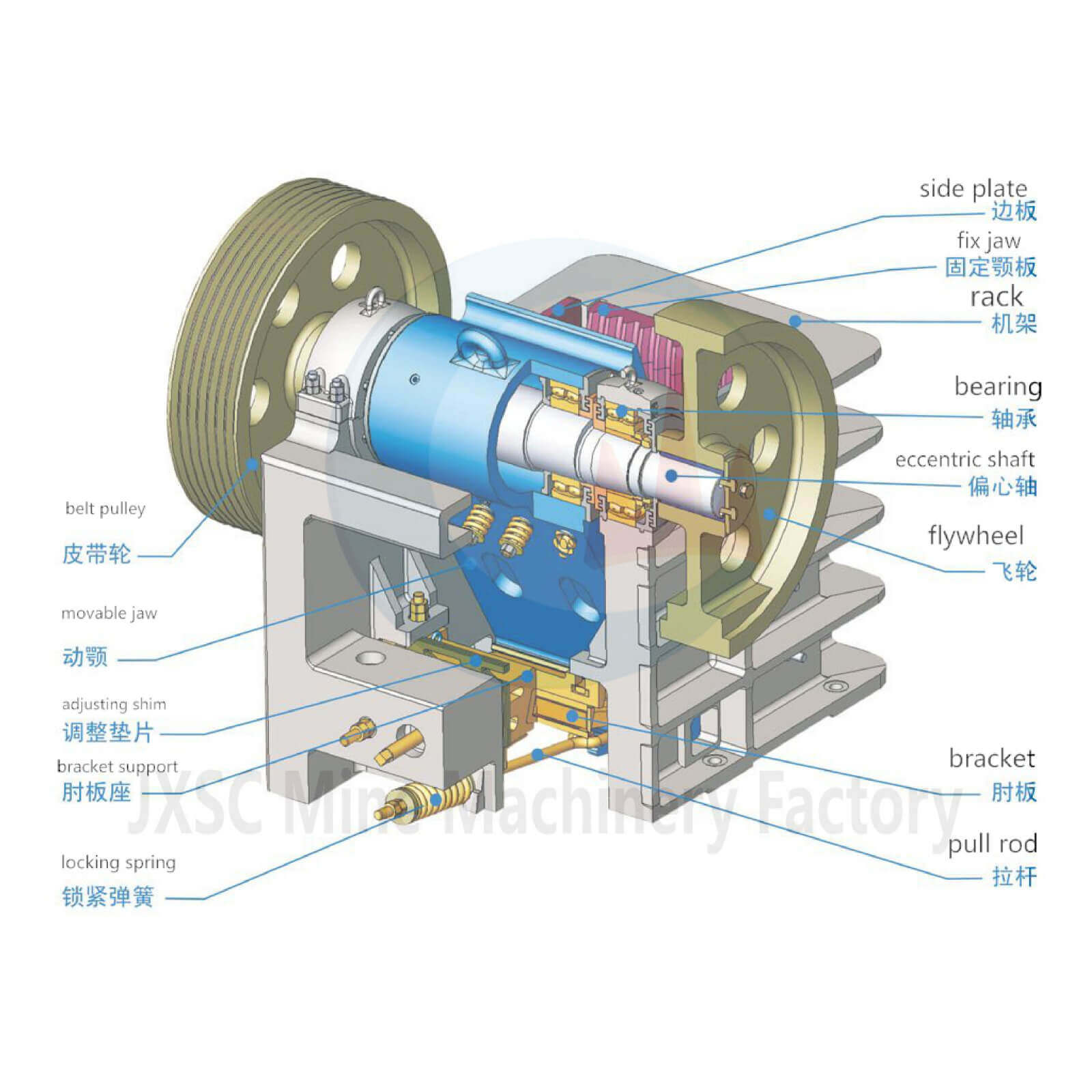
In heavy-duty industries such as mining, quarrying, construction, and recycling, crushers are the undeniable workhorses of daily operations. Whether reducing massive boulders to manageable aggregates or processing recycled concrete, these machines endure extreme stress, abrasive materials, and continuous operation. Because downtime translates directly to massive financial losses, the integrity of every component matters. When replacement time arrives, choosing the right crusher part manufacturer is one of the most critical decisions an industrial operator can make.
Sourcing durable industrial components is not just about finding a cheaper alternative to original equipment manufacturer (OEM) parts; it is about partnering with a supplier that guarantees reliability, precision, and longevity. However, with countless options available in the global marketplace, identifying a truly dependable partner requires careful evaluation. Let us explore the essential criteria you should consider when selecting a crusher part manufacturer to ensure your operations run smoothly and efficiently.
Material Quality and Advanced Metallurgy
The foundation of any durable industrial component lies in the metallurgy behind it. Crushers operate in fiercely abrasive environments where friction, impact, and pressure constantly wear down metal surfaces. A reputable crusher part manufacturer must possess deep expertise in material science and metallurgy.
Different parts require distinct alloy compositions. For instance, jaw plates, cone mantles, and bowl liners often demand high-manganese steel because of its exceptional work-hardening properties under heavy impact. On the other hand, blow bars in impact crushers might require a high-chrome iron alloy or a ceramic composite to resist extreme abrasion.
When evaluating a manufacturer, inquire about their metallurgical testing processes. Do they perform spectral analysis to verify chemical compositions before casting? Are their heat-treatment procedures optimized to ensure the uniform hardness and toughness of the metal? A high-quality manufacturer will be transparent about their material grades and provide material test reports to back up their claims.
Advanced Manufacturing Technologies and Precision Engineering
Having the right material is only half the battle; how that material is shaped and finished is equally important. Precision engineering dictates whether a replacement part will fit seamlessly into your existing machinery or cause premature wear and mechanical stress due to misalignment.
Modern manufacturing facilities should utilize advanced technologies such as computer numerical control (CNC) machining, state-of-the-art casting techniques, and computer-aided design (CAD) modeling. A top-tier crusher part manufacturer invests in precise pattern-making and casting simulations to eliminate internal defects like porosity, shrinkage, or cracks that can lead to catastrophic failure under load.
Furthermore, tight dimensional tolerances are essential. Even a fraction of a millimeter variance can lead to improper seating, increased vibration, bolt shearing, or accelerated wear on adjacent parts. Reviewing a manufacturer’s machinery fleet and quality assurance protocols will give you a clear picture of their engineering capabilities.
Rigorous Quality Control and Inspection Standards
Industrial components deployed in high-stress crushing applications leave no room for error. A comprehensive quality control system should be embedded at every stage of the production process, from raw material intake to final packaging.
Look for a crusher part manufacturer that implements non-destructive testing methods. Techniques such as ultrasonic testing, magnetic particle inspection, and dye penetrant testing are vital for detecting surface and subsurface flaws that are invisible to the naked eye. Additionally, coordinate measuring machines and laser scanning tools should be used for final dimensional verification. Certifications such as ISO 9001 serve as a baseline indicator that the manufacturer adheres to internationally recognized quality management systems.
OEM Compatibility and Customization Capabilities
Every crushing operation has unique challenges depending on the hardness of the feed material, moisture content, and desired output gradation. While standard replacement parts work for most applications, some operations demand customized solutions to maximize wear life.
An experienced crusher part manufacturer should offer a wide range of standard parts compatible with major global machinery brands such as Metso, Sandvik, Symons, Terex, and Trio. Beyond compatibility, they should possess the flexibility to engineer custom designs. For example, if you are experiencing uneven wear patterns on your cone crusher mantles, a capable manufacturer should be able to alter the cavity design or modify the alloy composition to address your specific operational bottlenecks.
Proven Industry Experience and Track Record
In the industrial manufacturing sector, experience is an invaluable teacher. A manufacturer with decades of proven industry tenure has likely encountered and solved virtually every wear-related problem imaginable.
When vetting potential suppliers, ask for case studies, client testimonials, or references from operations similar to yours. How long have they been producing wear parts? Do they understand the specific demands of hard rock mining versus aggregate production? An established crusher part manufacturer brings industry insight that goes beyond simply reading blueprints; they understand how parts behave in real-world, high-impact environments.
Supply Chain Reliability and Lead Times
Equipment breakdowns rarely happen on a convenient schedule. When a critical liner breaks or a toggle plate fails, you need a replacement part immediately to resume production. Delays in the supply chain can cost thousands of dollars per hour in idle equipment and labor.
Evaluate a manufacturer’s inventory levels, warehousing capabilities, and logistics network. Do they maintain a ready stock of fast-moving items for immediate dispatch? How robust are their shipping partnerships? A reliable partner will offer dependable lead times and maintain open channels of communication regarding order statuses. Furthermore, local or regional distribution hubs can drastically cut down transit times, ensuring your facility minimizes costly downtime.
Comprehensive Customer Support and Technical Expertise
Purchasing industrial components is not a one-time transaction; it is an ongoing partnership. The best manufacturers do not just sell parts—they provide comprehensive technical support and consultation services.
Technical support can include wear analysis audits, where experts examine your worn-out parts to determine why they failed prematurely and recommend adjustments to operating parameters or alloy types. They should also provide clear installation guidelines, maintenance tips, and troubleshooting assistance. A manufacturer that stands behind its products with responsive customer service demonstrates confidence in its craft and a genuine commitment to your operational success.
Conclusion
Selecting the right partner for your replacement needs is a decision that directly impacts your bottom line, equipment lifespan, and operational safety. By prioritizing material quality, precision engineering, rigorous quality control, and robust customer support, you can filter out substandard suppliers and secure a dependable crusher part manufacturer. Investing time into thorough vetting today will pay dividends tomorrow through maximized uptime, reduced maintenance costs, and peak crushing performance.